Lessons From the Past For a Regenerative Future
I had a really wonderful experience in Charleston last week at a conference hosted by our friends who own GrassRoots Wine. The premise of the conference was gathering wine producers, growers, and Food and Beverage professionals to learn from each other and discuss regenerative agriculture in regards to wine production as well as how it fits into the broader picture of agriculture as a whole. I was really impressed by all of the deep thinkers and innovators that attended including folks like Michel Nischan who has been pioneering the Farm To Table movement for almost 50 years as well as Jenni Harris from White Oak Pastures and dozens of some of the most sustainable and innovative wine makers in the world Raj Parr and Abe Schoener and Chiara Pepe to name a few. I was thoroughly impressed by the whole event and by Harry Roots mission of using the storytelling and influence of wine to help push Regnerative Ag more into the mainstream Food and Beverage community.
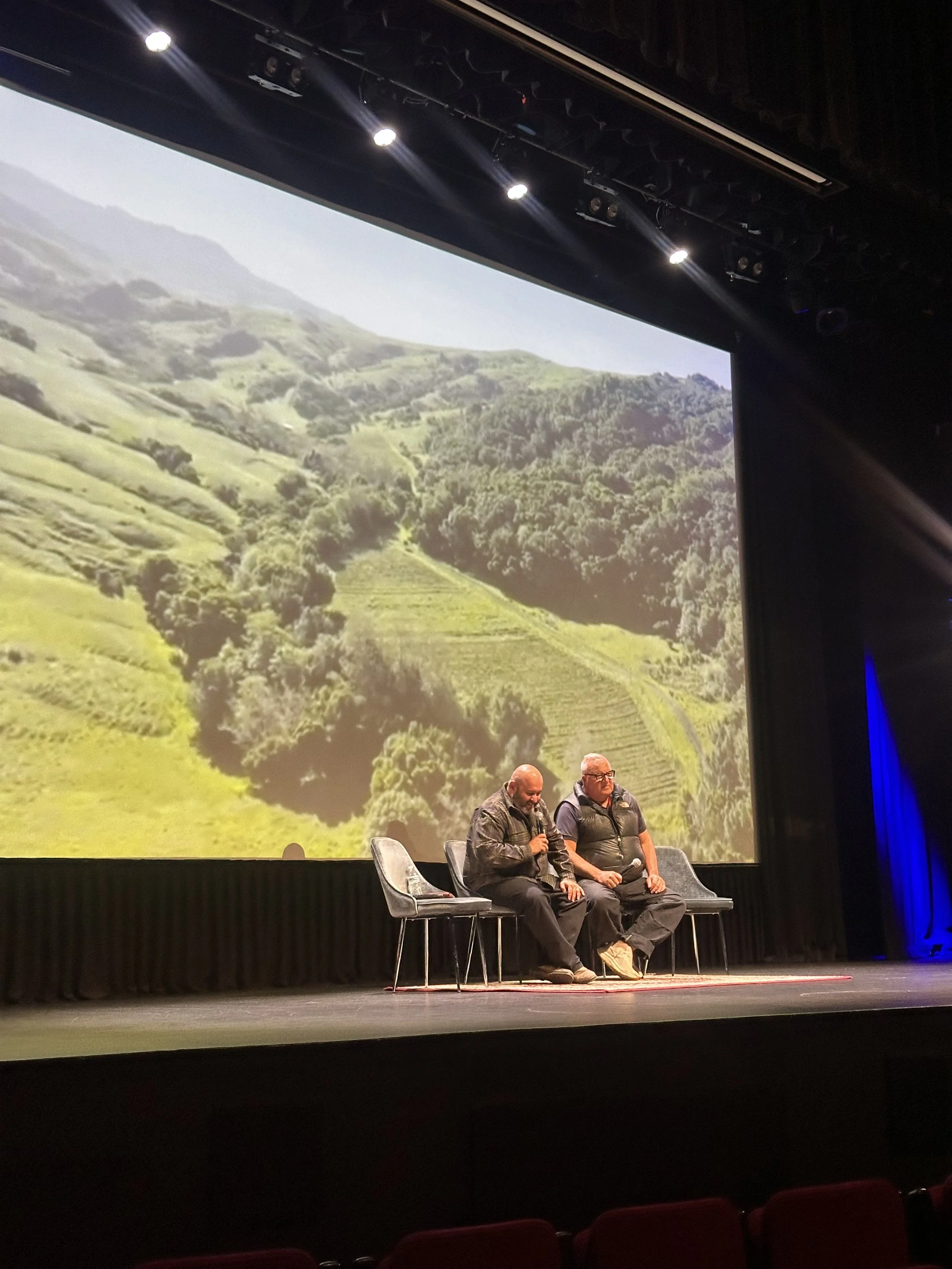
Here is one of the talks that I gave at the conference, let me know what you think:
We are living in a world run by the billionaire class while virtually everyone else seems to be getting left behind. Farmland has been swallowed up by development and consolidated into vast acreages owned by the ultra-rich. Young people continue to flee the countryside as the only opportunities lie in the urban centers. The average age of the American farmer rises each year because the next generation has already left. That younger generation now sees the value of the family farm skyrocket not because of production value, rather because of perceived investment value by those who know nothing about agriculture. Leaving the only logical option to cash in and sell the land. Agriculture has become Centralized to the point of just a few companies controlling the entire supply chain and is more reliant on petro chemicals, Industrialized methods, GMOs and Confinement Livestock operations than ever before and the only thing keeping this entire model afloat are government subsidies mostly for Corn, Soy and Wheat. Without these subsidies the current model of industrial agriculture would go belly up and mass starvation would ensue.
The external results of these trends include the HUMAN health crisis, the SOIL health crisis and the CLIMATE CRISIS globally. This downward spiral many say started in the 1940s with the “green revolution” when agriculture really became mechanized, chemicalized and genetic modification of crops to fit this new model began to appear, however I would suggest the downfall of logical agriculture in the Americas happened some 500 years ago with the European invasion of the Americas. Before this time the entire continent was managed by vast populations who had deep connections to the natural world and managed the landscape in a way that produced an abundance of food with no inputs required, think about that! Think of the huge herds of Bison following the fire managed grasslands and the ancient Chestnut groves covering the eastern part of North America. The rivers, lakes and oceans were managed as well and were crystal clear and teaming with life. Historians used to mistake this abundance as the unaltered state of nature but now we have a better understanding of what the first Europeans saw: The very idea that we were all taught in school that the Indians were small roving groups of hunter gatherers that had little impact on the land is a false story created by the Colonial powers that took over the “New World”! Archeologists and Anthropologists have now uncovered the reality that there were significant civilizations with large populations all over from North America all the way down to South America. The abundance of food was planned and managed by the people who have lived here for millennia! We all know the history post 1492; widespread decimation of indigenous inhabitants, unprecedented and violent slave trade with Africa. The utter exploitation and extraction of every resource. Today we are living in the aftermath of this reckless behavior that has no respect for the natural world.
Now it is up to us and to future generations to learn from the many lessons of the past, to rebuild and reclaim our food system and relationship with nature and with one another. Agriculture is not JUST the production of food! Agriculture is the management of land and the very epicenter of culture itself. We as a people have forgotten this, we have lost our way and become complacent, distracted by all the shiny bells and whistles and misleading promises of modern technology.
Regenerative agriculture is not just a healthier way to produce food, it is a paradigm shift, a new way (or old way rather) of looking at the world and our relationship to it. It is a remembering that we too are nature, we always have been. And we don’t have to be the great parasite that we have become. In fact we have the ability to once again become a keystone species, one that helps provide abundance for all!
Farmers are leading the way down this path of rebuilding the system, but we cannot do it alone! Meaningful change requires a cultural shift and a realignment of our entire value system. WE MUST lead by example; be the change we wish to see and others will follow. Economics are a driving force in what is possible. We cannot force a square peg through a round hole, which is what its like competing with government subsidized multinational ag corporations who are playing the global commodities game and calling it agriculture. We are trying to operate in an economic system that was not built for us! Let me give you an example: Lets imagine a regenerative farmer who need to make say $90k per year to support their family. This particular farmer raises pigs the can produce 300 pigs per year so they would need to net $300 hundred dollars profit per pig, seems reasonable. Then lets compare to Smithfield Foods, the largest producer of pork in this country, owned by a Chinese company who raises millions pigs per year, they average only $7 profit per pig, because of their ungodly multinational scale they reported 1.2 Billion in profit last year! Competing with the Smithfield price of $3/lb or whatever it is the regenerative farmer wouldn’t even make the $7/profit because remember they are working at a human scale, working with the land, they would have the privilege of losing money working tirelessly for an entire year in order to compete the industrial model! Like Will Harris would say “that shit don’t work!” The widespread change we need will require a widespread shift in consumer spending. The marketplace will dictate how far we can take this movement.
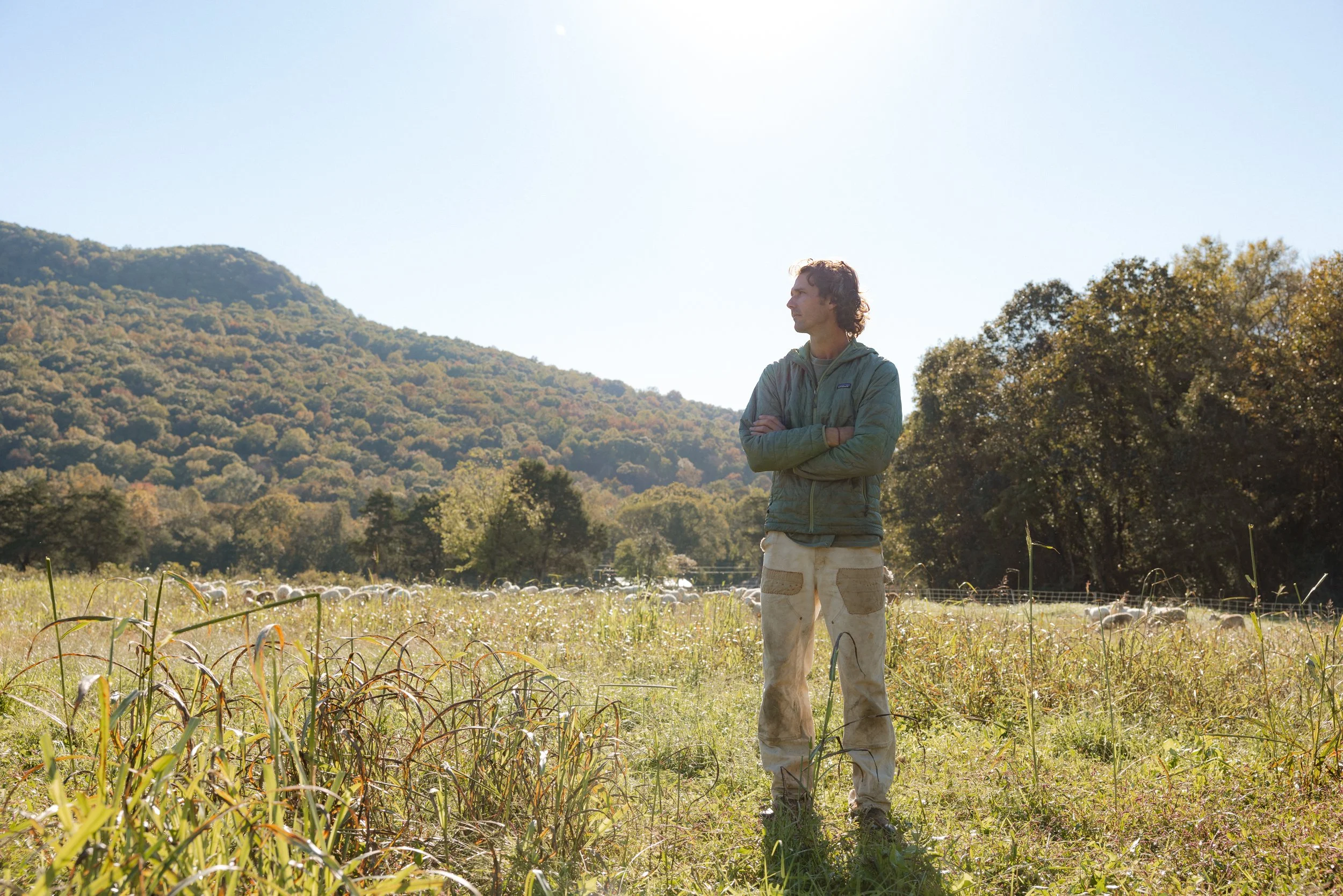
I was 8 years old when we moved to the farm. From day 1 my parents instilled in me the mindset that we will leave this land better than we found it. We started by picking up all the trash that scattered the landscape, cutting out the barbed wire that had been stapled to trees and cutting down invasive privet that was taking over the edges of the fields. We are the keepers of 350 acres in Southeast TN and this is a responsibility we take seriously. What was an overgrazed and neglected piece of land producing a few malnourished calves to be sent off to feedlots is now a bountiful haven teaming with life! The plant, animal insect and fungi populations have exploded! The spring fed river that flows through our farm is pristine and has absolutely zero runoff from our land which acts as a sponge absorbing enormous amounts of water deep into the hummus rich pastures. We have grasses sprouting up and bird species nesting that we have never seen here before! The deer, Turkey, Rabbits and other critters are openly grazing in the pastures and raising their young each Spring. The trees in our forest provide heat for our homes, logs for mushroom cultivation, nuts and fruits for the wildlife and livestock, creating endless habitat while sequestering enormous amounts of carbon. Meanwhile the farm is a buzz with human activity; 4 generations live here, our 3 kids are the youngest. My parents are out tending the vegetable gardens while a crew of workers drive trucks from field to field gathering thousands of chicken eggs that will be packaged and delivered around the region. The sheep graze peacefully, raising their lambs out on the open range. My wife Ashley hosts regular workshops ranging from cooking classes to white oak basketry and a forest school brings their students out once a week to get a taste of farm life. From time to time local chefs come out and prepare elaborate farm to table dinners allowing the community to taste the food right where it was grown. The creamery which is owned by another family is busily making artisan cheeses with milk from a local dairy, trucks drive in and out picking up cheese to be distributed around the country. Our farm generates 10 times more revenue per acre than the conventional row crop or cattle farm allowing us and our workers to make a good living wage. This is our livelihood and our life. Growing up and raising a family on this land is a blessing that I do not take for granted. Sometimes I forget that the connection I have to the land, to nature, is no longer the common experience. Most folks now think about nature as something separate from themselves, a place to go visit or learn about in a documentary, like somehow all of our lives aren’t all interconnected. But that’s not true! Whether you are inside a building working on a computer, chopping onions or pouring wine we are all contributing or taking away from the natural world, and what we eat will always have the most significant impact on the environment of all our actions. Dr Allen Williams says there are no neutral actions, we are either making a positive impact on the planet or a negative one with every decision we make. So I would say its worth taking the time to pause and consider what am I going to do next?
For many of us this has been a long and arduous journey. We have persisted because of a shared vision of what the future could be. The beautiful thing about this movement is that there is an almost universal agreement that a rising tide lifts all boats. Any one of us on our own would be lost at sea but together we grow stronger and harder to ignore. The shifting of cultural values seems like a daunting task, but we can see it happening in real time and we are participating, some of us leading the shift. We must use every tool available, whether that is sharing a meal with family and friends, hosting a conference, starting a business or shifting the purchasing habits of an existing one, educating on social media, advocating for policy change, or volunteering at the local foodbank or nonprofit. We use a variety of these tools; social media has been particularly effective for us in getting the word out there to a wider audience. Here’s some of what we share:
Our customers are not just dollar signs on our ledger, rather they are community members and friends. Every time a new customer approaches us it makes our day knowing our community just gained another ally. Business relationships aren’t just sterile monetary transactions for us, they are meaningful long-lasting relationships. That’s why we put a lot of thought into every product we source and every business we support.
The shared vision of the regenerative movement is one where ecological agriculture replaces the extractive, damaging industrial model. This vision requires local, regional and national communities to band together with intention and collaboration. We need all hands on-deck to reshape our food system: Young and Old Farmers, Landowners and Lands Trusts, Meat Processors, Grain Millers, Value Added Processors, Distributors, Retailers, Wholesalers, Farmers Markets, Restaurants, Fermenters, Distillers, Bakers, Activists, Politicians and Investors. Imagine the boost to local communities, all that money that has been flowing out to the mega food conglomerates, lining the pockets of CEOs would instead be in circulation locally. Rural agricultural areas will be a hustle and bustle with activity. Well-paying and fulfilling jobs will be plentiful. This will create a regenerative economy an economy that is circular rather than linear. When I buy bread from the baker, I feel great because she buys eggs from us and her bread is amazing! The flour for the bakery comes from our friend the miller and all of the grains he mills are grown on farms in the area. There are hundreds of interconnected relationships like this right here in our own regional food web and we overlap with neighboring food webs with similar structures building in a resilience that can withstand the tests of time.
We are living in a pivotal moment where people are craving cultural change. People are sick of literally being sick! People are sick of being taken advantage of and smooth talked by politicians who are puppets whose strings are pulled by billionaires and multinational corporations. We live in an era of lightning fast communication and sharing of ideas through the internet and social media. Our scientific understanding of human history and our ecological impact on the world is rapidly developing and refining. Knowing what we know today how could we be content with the status quo? Surely, we aren’t like the characters in the movie “Don’t Look Up” where a comet is about to destroy the planet, but everyone is too busy arguing about politics and celebrity gossip to pay any attention to their eminent doom! Surely, we aren’t that stupid! WE are the ones paying attention! We are the ones who are going to do SOMETHING! We are the ones who actually give a damn and want to leave the world a better place for the next generation. After all a life lived in self-absorption and greed is not much of a life at all. Whereas a life lived in service of others with a vision of creating a better world is one filled with unexpected rewards and TRUE happiness. And THAT is what Regenerative Agriculture is all about!
Thank You!